Top 10 Outbound Sales Tools for SDR Teams in 2026
Boost your pipeline with our 2026 guide to the best outbound sales tools. Compare features, pricing, and use cases for SDRs to find the perfect fit.
You're probably staring at a stack that looks half-finished and somehow still too expensive. The list-building tool doesn't talk cleanly to the sequencer, the CRM is full of stale records, and the reps keep asking why the “good” leads still bounce. That's the outbound problem in 2026, not a lack of software, but a lack of fit between lead sourcing, engagement, and data orchestration.
The best outbound sales tools don't all do the same job. Some help you find businesses you'd never catch in a static database. Some turn those names into replies. Others keep the list clean enough that the whole motion doesn't collapse after the first import. If you pick by category instead of by hype, the stack gets simpler fast.
1. MapLeads
MapLeads belongs at the top of the list because it solves the part of outbound teams underinvest in, source quality. It turns Google Maps, Apple Maps, and Bing Maps searches into exportable lead lists, so you're not locked into a single index when you're building local or category-based prospecting motions. That matters because the quality bottleneck is often not sending, it's whether the list is reachable in the first place, which is why industry guidance keeps pushing teams toward data quality over database size and automation depth over feature count best outbound sales tools guidance.
MapLeads is especially useful when you need public-business discovery beyond the usual B2B databases. The platform works in the cloud, keeps the workflow uniform across three map sources, and adds verified emails, phone numbers, social profiles, review data, and normalized location metadata into a schema that's much easier to push into a CRM. That makes it a practical choice for SDR teams, agencies, recruiters, and local SEO operators who care more about coverage and cleanliness than another generic sending feature.
Why it stands out in a real stack
Practical rule: if the lead source is weak, the rest of the stack just automates waste.
MapLeads gives you a persistent workspace, cross-source de-duplication, and exportable files in CSV, Excel, and JSON, so you can reuse leads without rerunning searches. It also includes a browsable business database, webhook endpoints, and a REST API, which makes it easier to wire into downstream tools without brittle scraping scripts. The pricing is transparent too, with monthly plans built around lead credits, not mystery usage math.
A few trade-offs are worth calling out. You still own compliance decisions for the outreach you run, and public business data can still trigger GDPR or CAN-SPAM obligations depending on where you operate. Role-based and catch-all emails are also labeled, but they're not the same as a direct named inbox, so a smart team still filters by use case before sequencing.
Where it fits best
- Lead sourcing from public web data when commercial databases miss local businesses.
- Operations-heavy teams that want cloud-run extraction instead of local scripts and proxy management.
- Outbound programs that need verified contact data before they ever hit a sequencer.
- Teams that want one search workflow across Google, Apple, and Bing instead of juggling separate tools.
For a more detailed comparison against other data and orchestration stacks, see the Apollo alternative fit for map-based sourcing. That's the kind of workflow distinction that matters when you're deciding whether the problem is discovery or sending.
2. Apollo.io
Apollo.io is the default answer when a team wants data plus engagement without buying two separate products. It combines a large B2B database, enrichment, a Chrome extension, CRM integrations, and multichannel sequencing, so reps can go from prospecting to outreach in one workflow. For lean teams, that reduces tool sprawl fast, especially when the goal is to get moving without a long implementation cycle.
Apollo works best when the buyer wants speed and breadth, not perfect specialization. The practical appeal is obvious, one system to search, enrich, sequence, and log activity. The trade-off is that database coverage and accuracy can vary by segment, so a disciplined team should test a sample from its own ICP before rolling it out broadly.
Best use case and common friction
Apollo is strongest when the SDR motion is still being standardized. If the team needs a fast path from list building to multichannel outreach, Apollo is easier to operationalize than stitching together a separate data vendor, dialer, and sequencer. It also suits smaller teams because self-serve onboarding lowers the barrier to adoption.
The friction shows up when teams lean on Apollo for everything. Exporting and some API usage consume credits, so the economics change as volume rises. If your motion depends on highly verified phone coverage, EMEA compliance nuance, or more controlled data orchestration, Apollo may feel broad rather than best-in-class.
For teams comparing tools by function, Apollo usually sits in the engagement bucket with enough data capability to be a credible first purchase. It's a sensible default, but not always the final destination.
Apollo alternative comparison for MapLeads
3. ZoomInfo SalesOS and Engage or Copilot
ZoomInfo is the enterprise answer to outbound when data, intent, and orchestration all need to live in one ecosystem. SalesOS brings the contact and company layer, while Engage handles outbound activity, and Copilot adds account summarization and prioritization. That combination makes sense for larger revenue teams that want shared data standards across sales, marketing, and ops.
The big strength here is coordination. You're not just buying names, you're buying a wider GTM operating layer with firmographics, technographics, intent, and web visitor tracking. For teams already running a complex stack, that can simplify governance and make handoffs cleaner across functions.
Where it earns its keep
ZoomInfo is most compelling when outbound isn't an isolated SDR function. If marketing, sales, and operations all need a common account view, the suite structure is a real advantage. The Copilot layer also helps prioritize outreach, which is valuable when reps are dealing with more accounts than they can manually research.
The downside is the commitment. Pricing is quote-based and usually higher, and implementation usually asks for process discipline. That's not a problem for a mature org, but it can be a drag for a small team that only needs prospecting and sequencing.
If the question is “what platform do we standardize on across the GTM team,” ZoomInfo is in the conversation. If the question is “what tool gets us to clean outbound fastest,” it may be more system than you need.
ZoomInfo alternative comparison for MapLeads
Visit ZoomInfo
4. Cognism
Cognism makes the most sense when outbound depends on phone-heavy execution and the team cares about compliance. Its Diamond Data offering is built around phone-verified mobile numbers, which is why it's often favored in EMEA-heavy programs where direct dials only matter if the numbers connect. That is a different buying problem from simple contact aggregation.
The platform also feels more deliberate than many generalist databases. Prospecting, enrichment, CRM integration, and GDPR-focused processes all point in the same direction, which helps when your sales motion crosses regions with different rules and expectations. In practice, that can keep the team from chasing bloated lists that look good in a demo and underperform in the field.
When to choose it over a broader database
Cognism is the better fit when connect rates matter more than list volume. If the SDR team spends a lot of time dialing, a cleaner phone dataset can save more time than another shallow feature layer ever will. It also fits teams that want a vendor with a clearer compliance posture.
The trade-off is price and regional depth. It's quote-based, so you need to be ready for an enterprise-style buying motion, and coverage can vary by region and niche. That makes piloting important before you standardize it across the whole team.
For a team that is serious about outbound calls, Cognism is less about convenience and more about reducing wasted effort.
5. Salesloft
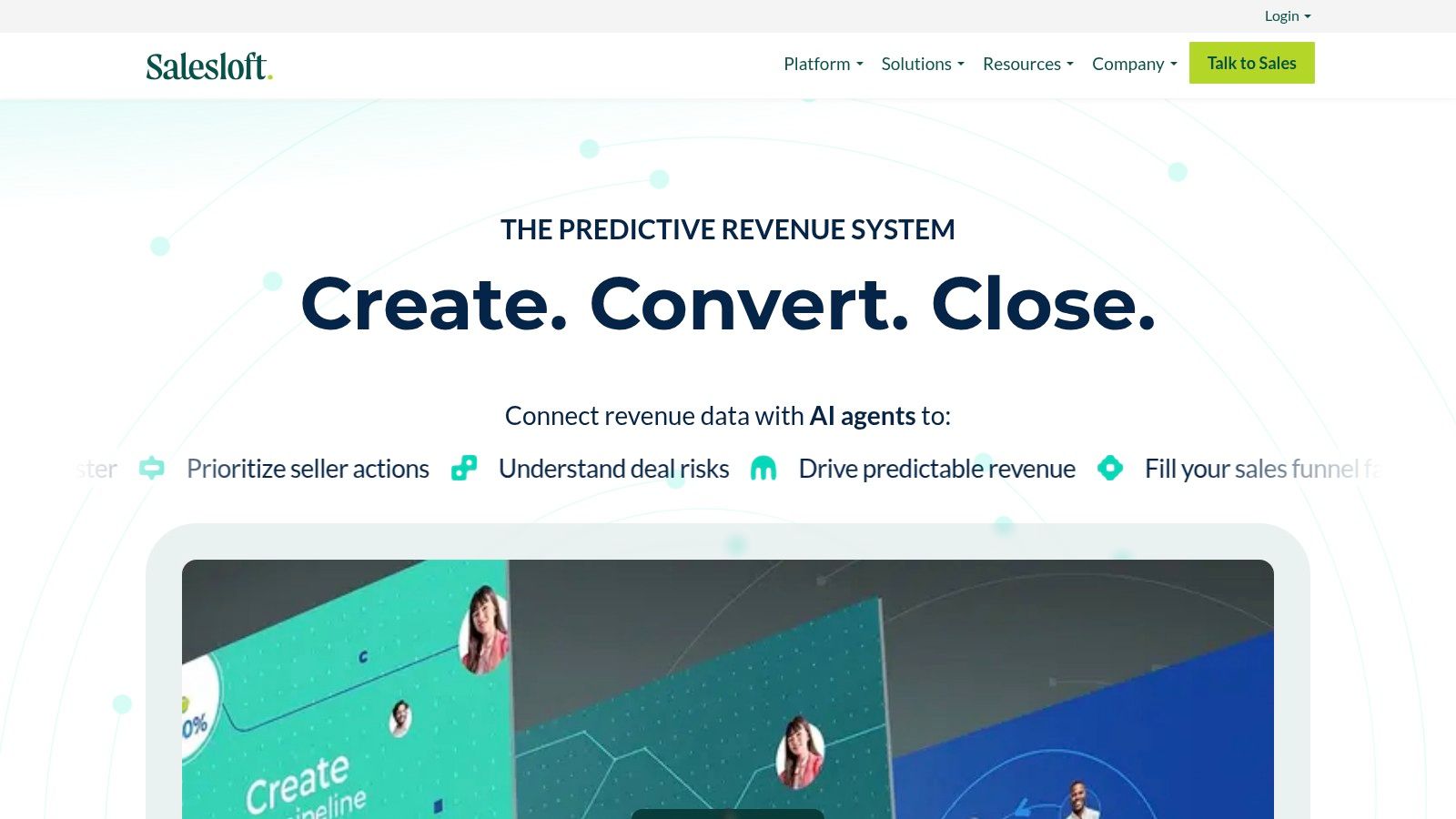
Salesloft is the kind of platform teams buy when outbound has to connect cleanly to pipeline management, coaching, and forecasting. Its cadence engine, dialing, conversation intelligence, deals workspace, analytics, and governance features make it a full revenue execution layer, not just a sequencer. That's why it tends to show up in larger orgs that want standardization across reps.
The best part of Salesloft is consistency. Reps get a structured workflow, managers get coaching and visibility, and operations get a platform that fits into a broader revenue motion. That makes it a natural choice when leadership wants more than campaign execution, they want a way to run the sales process itself.
The real trade-off
Salesloft is powerful, but it asks for commitment. Pricing is quote-based and usually higher than SMB tools, and the value only shows up if the org adopts it broadly. If only a subset of reps uses it, the platform starts to look expensive quickly.
It also takes configuration and training. That's not a knock, it's just the reality of enterprise sales software. The teams that win with Salesloft usually care about process rigor, manager visibility, and CRM discipline as much as they care about outbound volume.
If you're comparing it to a lighter tool, think of Salesloft as the choice for organizations that want to coach, measure, and forecast from the same system they use to sequence.
6. Outreach
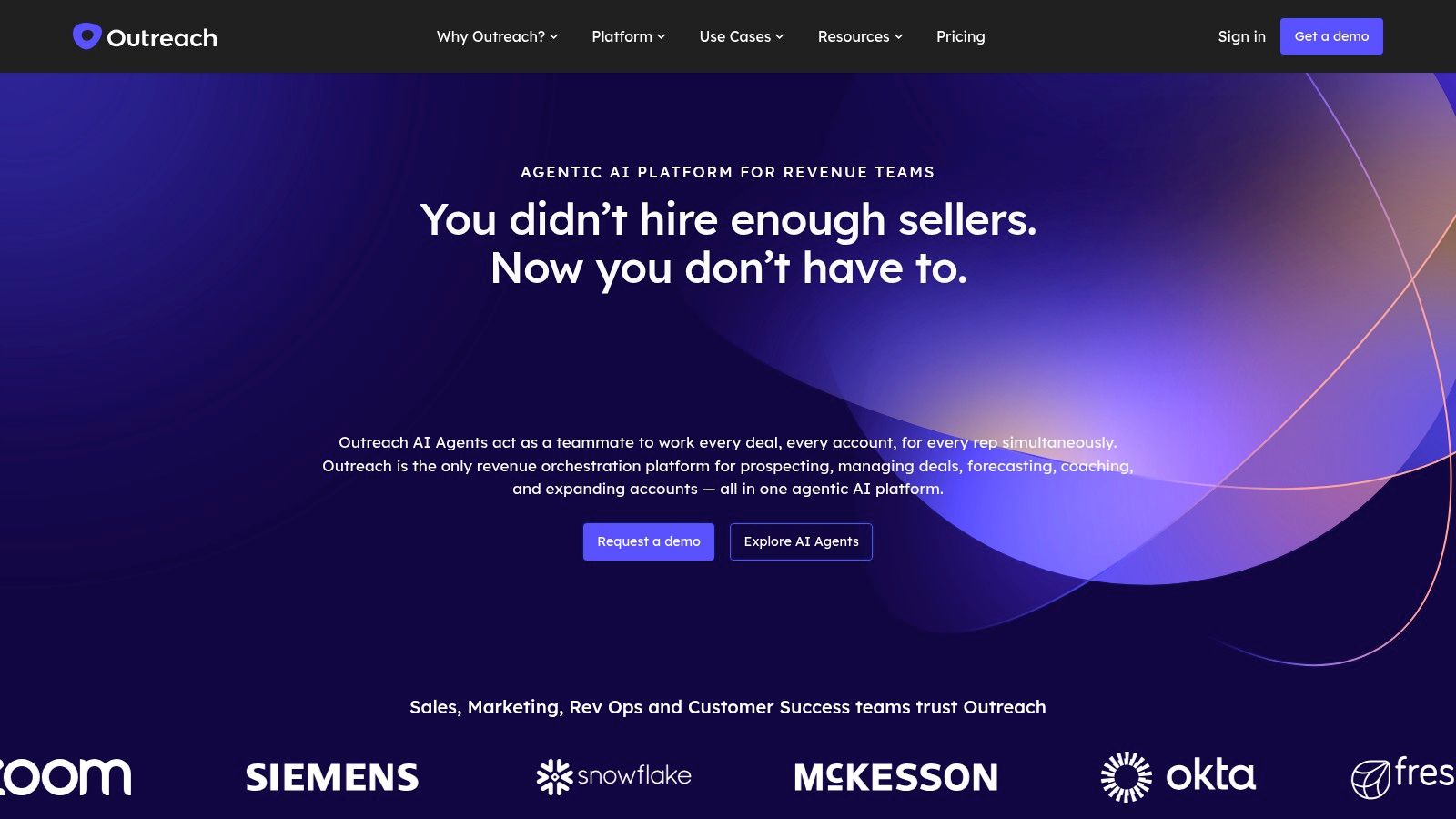
Outreach is the platform for teams that want execution depth across SDR, AE, and customer-facing motions. It supports sequences across email, LinkedIn, calls, and SMS, and it layers in buyer sentiment analysis, out-of-office detection, A/B testing, pipeline tools, forecasting, and coaching. That breadth makes it more than a sending tool, it's an operating system for revenue activity.
The main advantage is how much context it preserves. Reps don't just send messages, they work from a system that can tie activity back to deals, pipeline health, and coaching workflows. For leaders running large teams, that consolidation is a real operational win.
What works and what doesn't
Outreach is strongest when the organization wants to scale playbooks. If managers are continuously refining messaging, cadence structure, and rep behavior, the analytics and workflow controls matter a lot. The platform is also well suited to teams that need multichannel execution without stitching together several point tools.
The downside is administration. It's a heavier system than a lightweight sequencer, and the setup effort reflects that. Quote-based pricing also means the cost is tied to how the organization adopts it.
If the team already has its list source and just needs a durable place to run outbound, Outreach is a serious option. If the team still needs to figure out who to target and where the data should come from, start upstream first.
7. Reply.io
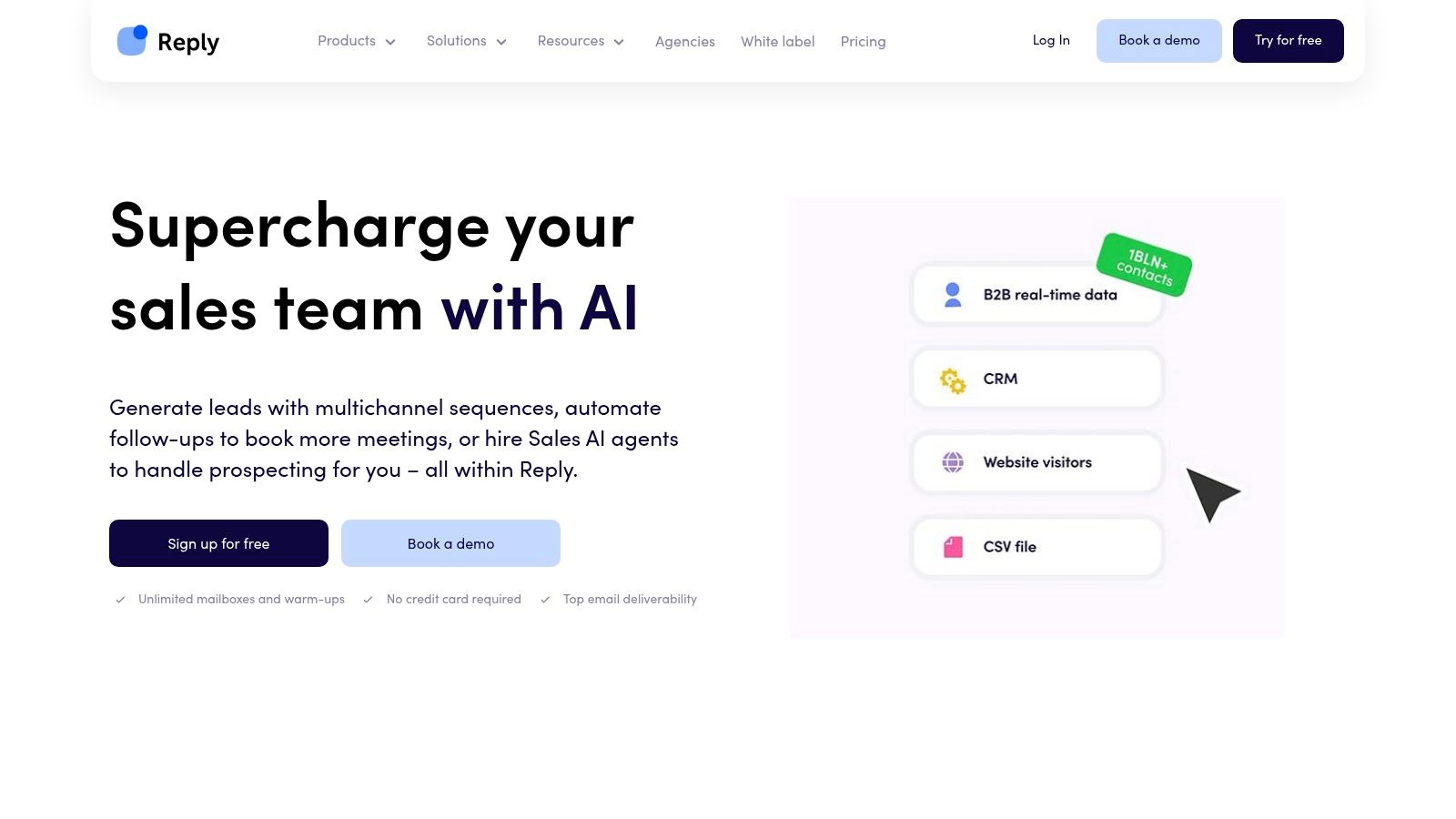
Reply.io sits in the sweet spot for teams that want multichannel execution without enterprise overhead. It handles email, LinkedIn actions, calls, and SMS, and it adds AI-assisted workflow support so reps can move faster without losing the structure of a cadence. For agencies and SMB teams, that combination is often enough.
The appeal is practical. You get a workable outbound engine, decent flexibility, and a lower entry point than the enterprise suites. If the team already has a data source, Reply.io can become the execution layer pretty quickly.
Where it fits in a stack
Reply.io makes the most sense when you already know your channel mix. If your team sends email and uses LinkedIn tasks or calls as follow-up, the platform gives you one place to manage the motion. It's also a decent choice when you need to scale from a small number of reps to a larger active set without jumping straight to an enterprise contract.
The downside is reporting depth and integration breadth. It does the job, but it's lighter than the top-tier platforms. Add-ons for LinkedIn automation and dialing can also increase cost, so the headline price doesn't always tell the full story.
For many teams, Reply.io is the pragmatic middle path between a bare-bones sender and a heavy revenue suite.
8. lemlist
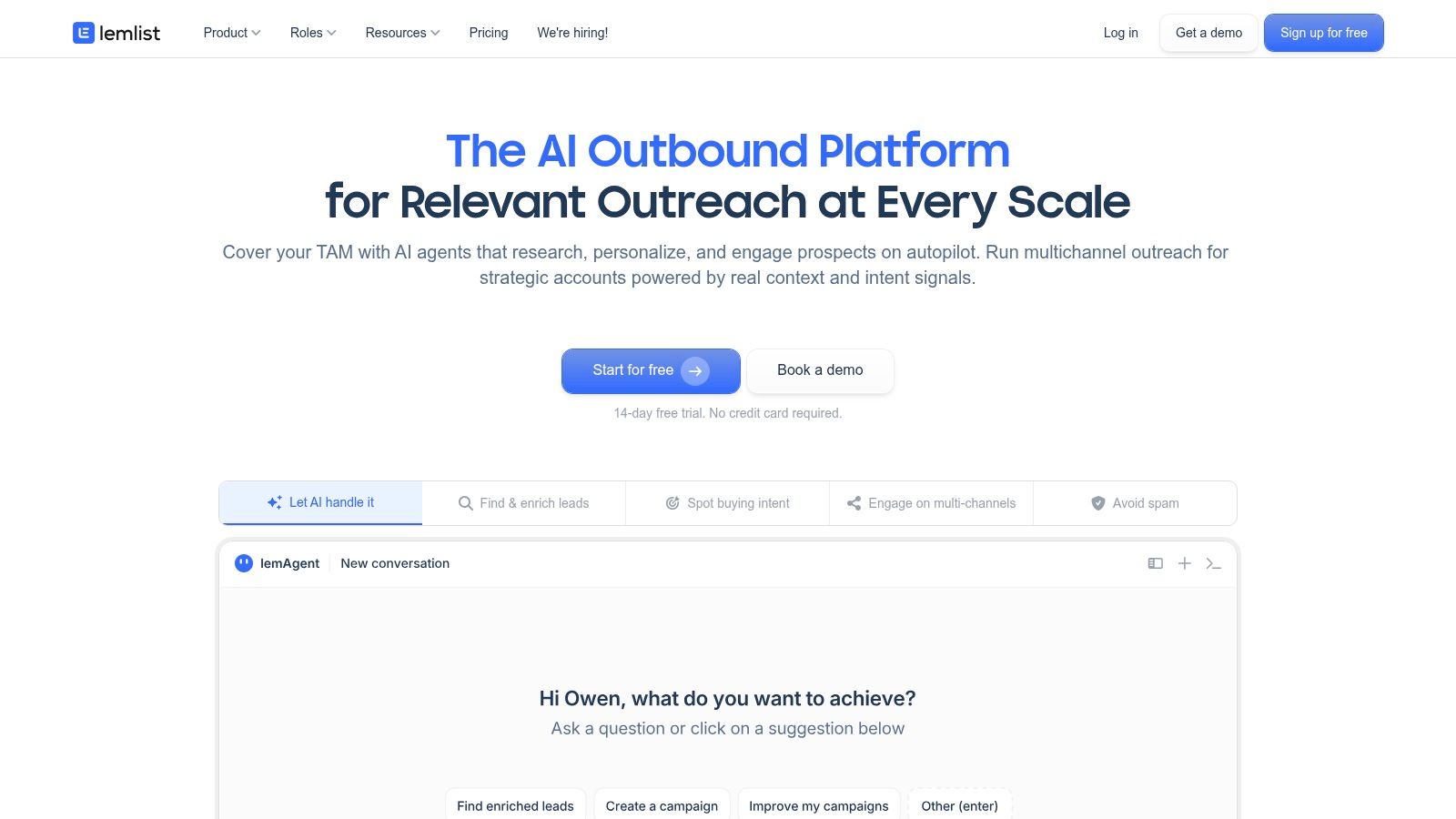
lemlist is a strong choice when the team wants personalization and deliverability controls in the same place. It combines lead finding, enrichment, multichannel sequencing, warm-up, monitoring, and built-in dialing, so it covers more of the outbound workflow than a simple cold email sender. That breadth matters when the team wants to keep message quality high while still sending at scale.
The public pricing helps too. Teams don't have to guess what the starting point is, which makes it easier to compare against more opaque tools. That clarity is useful for agencies and lean teams that need to forecast spend before they commit.
Best fit and caution
lemlist works well when the team values control over raw feature count. It's especially attractive if deliverability is a recurring concern, because the platform puts warm-up and monitoring close to the sending motion. It also supports multichannel behavior, which helps when email alone isn't enough.
The main watch-out is variable cost. Credits for enrichment and AI features can change the economics as volume grows, and database depth can vary by niche. That means it's smart to test it against your own ICP before you build a long-term motion around it.
If your priority is personalized outbound with a cleaner sending environment, lemlist deserves a serious look.
9. Instantly
Instantly is built for scale, especially if cold email is the primary motion. The headline idea is simple, connect many email accounts, manage them centrally, and keep deliverability controls in place while sending at volume. That model is why it gets so much attention from growth teams and agencies running high-output outreach.
It also goes beyond sending. The built-in lead database, waterfall enrichment, AI agents, and unified inbox make it feel more like a full cold email environment than a bare sender. For teams that want to move quickly, that reduces friction.
Where it's strong, and where to be careful
Instantly is strong when email is the channel and speed matters. It's fast to get going, and the platform is clearly optimized for teams that want to manage multiple inboxes without a lot of setup overhead. For high-volume motions, that's a practical advantage.
The caution is that email-only means you still need other tools if your strategy includes phone or LinkedIn. Add-ons can also stack up, so the monthly spend may be higher than the base price suggests. Deliverability should be tested in the world too, because a warmup score isn't the same as inbox placement.
Instantly is a good fit when the team wants a dedicated cold email engine and already has a separate data strategy.
10. Clay
Clay is the data orchestration layer for outbound teams that treat list quality as a competitive advantage. It lets you chain enrichment providers, deduplicate records, run AI transforms, and push the finished output into a sequencer or CRM. For signal-based prospecting, it's one of the most flexible tools in the category.
The best way to think about Clay is as the plumbing behind targeted outbound. It's not the sender, and it's not the database you buy and forget. It's the workspace that helps you build a more relevant list by combining multiple data sources and transforming them into something your team can use.
Why power users like it
Clay shines when the ICP is specific and changing. If you need to enrich by company signals, refresh lists, or combine several sources before sending, it gives you the control most simple tools don't. That's why it pairs so well with sequencing tools like Reply.io, Apollo, or a dedicated email sender.
The trade-off is operational discipline. The learning curve is real, and the credit math can become a management task if the team isn't careful. For simple list building, it can feel like too much tool for too little need.
If your outbound motion lives or dies on the quality of the underlying data, Clay is worth the complexity. If not, it may be more machinery than you need.
Clay alternative comparison for MapLeads
Top 10 Outbound Sales Tools, Feature & Pricing Comparison
| Product | Core features | Data quality & verification (★) | Unique selling points (✨/🏆) | Target audience (👥) | Pricing / Value (💰) |
|---|---|---|---|---|---|
| MapLeads 🏆 | Tri-source scraping (Google/Apple/Bing), cloud jobs, de-dupe, CSV/Excel/JSON export, persistent workspace | ★★★★★ Verified emails (BillionVerify), phones, reviews, full location metadata | ✨ Tri-source + built-in verification, cloud-managed jobs, credit reconciliation & refunds, previewable DB 🏆 | 👥 SDRs, agencies, local-SEO, recruiters, developers | 💰 $50–$200/mo (Lite/Pro/Max), credits per lead; annual ~20% off |
| Apollo.io | B2B contact/company DB, enrichment, multichannel sequences, Chrome extension, dialer | ★★★★ Multi-step email verification, company/contact enrichment | ✨ End-to-end discovery → outreach in one product | 👥 SMBs, sales teams, SDRs | 💰 Free tier → paid plans; credits for exports/usage |
| ZoomInfo SalesOS | Large B2B data + intent, web visitor tracking, Engage sequencing, AI Copilot | ★★★★★ Extensive firmographics, technographics & intent signals | ✨ Enterprise-grade data + intent signals + Copilot prioritization | 👥 Enterprise GTM, sales & marketing ops | 💰 Quote-based, premium enterprise pricing |
| Cognism | Prospecting, enrichment, GDPR-focused processes, Diamond Data phone verification | ★★★★ Phone-verified mobile numbers, on-demand verification | ✨ GDPR-forward compliance and phone-verified "Diamond Data" | 👥 Phone-heavy outbound teams, EMEA/NA-focused sellers | 💰 Quote-based (premium for phone-verified data) |
| Salesloft | Cadences, dialing, conversation intelligence, forecasting, integrations | ★★★★ Strong engagement + conversation intelligence | ✨ Mature sequencing, coaching, enterprise governance | 👥 Large sales teams, revenue ops, enablement | 💰 Quote-based, typically higher TCO |
| Outreach | Multichannel sequencing (email/LinkedIn/calls/SMS), AI analytics & forecasting | ★★★★ Unified activity capture, strong analytics | ✨ AI sentiment/OOO detection, scalable playbooks | 👥 Mid-market → enterprise sales orgs | 💰 Quote-based, mid/enterprise pricing |
| Reply.io | Multichannel sequences, cloud dialer, Chrome ext, AI SDR options | ★★★ Solid multichannel outreach, basic enrichment | ✨ Budget-friendly multichannel + API automation | 👥 SMBs, agencies scaling outreach | 💰 Lower entry price; add-ons increase cost |
| lemlist | Lead finding + verifier, multichannel workflows, deliverability tooling | ★★★★ Verifier + deliverability (warm-up, alerts) | ✨ Personalization-first outreach & deliverability focus | 👥 SMBs, growth teams, agencies | 💰 Public pricing, usage credits for enrichment/AI |
| Instantly | Cold email scale (many inboxes), reputation safeguards, AI CRM | ★★★ Waterfall enrichment/verification, deliverability controls | ✨ Designed to scale many sending domains + AI agents | 👥 Teams running high-volume cold email | 💰 Transparent per-seat/pricing; optimized for scale |
| Clay | Data orchestration & enrichment workspace, chaining providers, automations | ★★★★ 1-click enrichments, de-dup, versioned tables & scheduling | ✨ Combine multiple providers as waterfalls to cut unit costs | 👥 Data/ops teams, SDRs needing custom pipelines | 💰 Subscription; can lower per-lead enrichment cost |
How to Choose the Right Outbound Sales Tool for Your Team
Selecting the right outbound tool isn't really about feature density. It's about identifying where your current motion breaks, then buying the layer that fixes that problem first. If you choose the wrong layer, you'll still have a “complete” stack and a broken pipeline.
Start with Primary Use Case. If your issue is lead sourcing, tools like MapLeads, Clay, or Cognism belong upstream of any sequencer. If the problem is engagement, then Apollo, Reply.io, Salesloft, Outreach, or Instantly make more sense because they run the outreach. That distinction matters because even strong outbound programs can still struggle at the list, sequencing, and deliverability layer, and a sending tool can't fix bad inputs.
Then look at team size and scalability. Smaller teams usually need self-serve onboarding, simple workflows, and a faster path to first campaign. Larger orgs need governance, CRM hygiene, manager visibility, and room for multiple reps to work the same playbook without chaos. That's where enterprise platforms like Salesloft, Outreach, and ZoomInfo start to justify themselves.
Budget is the next filter, and seat-based pricing behaves very differently from usage-based models. A lower entry price can look attractive until credits, add-ons, inbox counts, or enrichment usage start piling up. On the other hand, a more expensive suite can be cheaper operationally if it replaces three or four tools and gets adopted consistently.
Finally, check integration needs. If your team lives in Salesforce, then the CRM-connected path is usually easier to sustain. If your outreach depends on public web discovery, map data, or enrichment waterfalls, then the stack has to support those inputs cleanly or the reps will end up working around it.
The best buying move is usually simple. Find the biggest bottleneck, pilot one tool that solves it directly, and only add the next layer once the first one is stable. That approach keeps outbound from turning into a stack of disconnected tabs and gives your team a cleaner path from source data to booked meetings.
If you're ready to tighten the sourcing side of your outbound workflow, MapLeads is built for exactly that. It pulls businesses from Google Maps, Apple Maps, and Bing Maps, verifies contacts, and gives you exportable lists you can use. Visit MapLeads to see how a cleaner lead layer changes the rest of the stack.